Detroit techno and the Belleville Three
How three friends from a Detroit suburb fused European synth-pop, funk and futurism into techno, and how the sound found its biggest audience in Europe.
Where techno came from
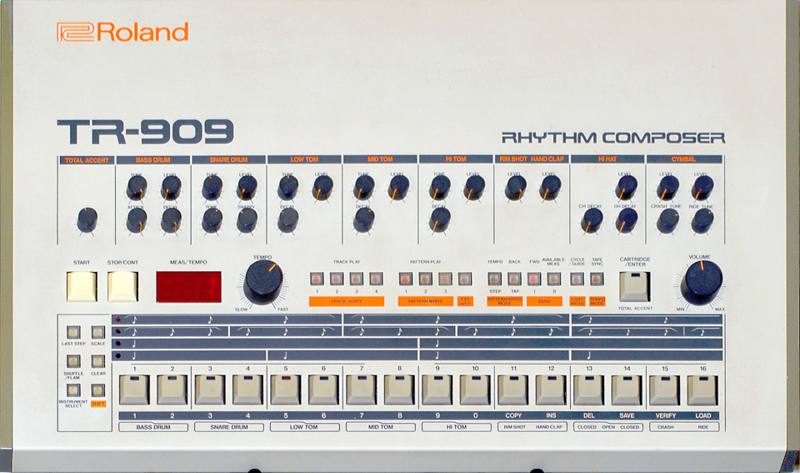
Techno was born in and around Detroit in the early and mid 1980s. Its founders are usually named as the Belleville Three: Juan Atkins, Derrick May and Kevin Saunderson, who met as teenagers in Belleville, Michigan, a small town outside the city.
Their influences were unusual for the time and place:
- European electronic music, especially Kraftwerk, with its machine rhythms and synthesizers.
- Funk, particularly Parliament-Funkadelic and its space-age imagery.
- Futurist books, including the writer Alvin Toffler, whose phrase "techno rebels" inspired the genre's name.
- Detroit itself, a city shaped by car factories and automation.
Radio and high school parties
The Detroit radio DJ known as The Electrifying Mojo played a wildly eclectic mix of funk, new wave, rock and electronic music, exposing listeners to sounds they would never hear elsewhere. Teenagers in Detroit also ran a lively scene of high school social clubs and parties, where young DJs learned to mix. See radio DJs.
The first records
| Artist | Record | Why it matters |
|---|---|---|
| Cybotron (Juan Atkins and Rick Davis) | "Clear" (1983) | Electro roots of the Detroit sound |
| Model 500 (Juan Atkins) | "No UFOs" (1985) | Early techno blueprint on Atkins' Metroplex label |
| Rhythim Is Rhythim (Derrick May) | "Strings of Life" (1987) | Emotional piano and strings; a club classic |
| Inner City (Kevin Saunderson and Paris Grey) | "Big Fun" (1988) | A vocal crossover hit in the UK |
A 1988 UK compilation titled Techno! The New Dance Sound of Detroit helped fix the name in the public mind and introduced many European listeners to the music.
The sound
Early Detroit techno is often described as soulful machine music: drum machine rhythms and synth lines with melancholy chords and a sense of the future. Compared with Chicago house, it usually has:
- Fewer vocals.
- More synthetic textures and strings.
- A cooler, more futuristic mood.
- Tempos often around 120 to 135 BPM, with later techno running faster.
The second wave and Europe
In the early 1990s, the collective Underground Resistance, founded by Jeff Mills and Mike Banks, brought a harder, more independent sound and a do-it-yourself ethic. Other Detroit artists, including Carl Craig, Richie Hawtin (based across the river in Windsor, Ontario) and Robert Hood, pushed techno in new directions, including minimal techno.
Techno found its biggest audience in Europe, especially in Berlin, where clubs opened after the fall of the Berlin Wall in 1989 gave the music a new home. Many Detroit artists built their careers on European tours and labels.
Techno today
Detroit still celebrates its legacy with the Movement festival, held over Memorial Day weekend. Techno has split into many subgenres, from minimal and dub techno to hard and industrial styles. See genres A to Z and the BPM chart.
When mixing early Detroit records, listen for long, evolving loops. These tracks reward long blends over 32 bars or more, rather than quick cuts.